Deck: A Paris exhibition opens today with 40 looks. A Black-founded archive in Harlem reminds us that fashion becomes history through the people who decide to keep the record.
A garment has a first life in motion. It is cut, fitted, altered, photographed, worn, repeated, repaired, borrowed, stored in a wardrobe or left in the back of one. It gathers meaning through bodies and rooms: the occasion, the labour, the maker’s hand, the person who chose it, the person who could not afford it, the family member who kept it.
Its second life begins when somebody decides it should not disappear.
Today, the Musée des Arts Décoratifs in Paris opens Look: 40 Years of Fashion at the Museum. The exhibition marks 40 years since the Musée des Arts de la Mode was founded within MAD and brings together 40 iconic outfits. Its most useful proposition is not the anniversary number. It is the route the museum chooses to make visible: a garment moves from initial sketch and sewing workshop to runway and fashion photography, then through storage, conservation, restoration and display.
That sequence should change how we look at an exhibition. The museum label can make fashion seem finished: here is the object, now certified, secure in history. But Look makes a different point. Collection is not a finishing line. It is another form of work. Somebody has to document the piece, decide what it is called, stabilise a damaged seam, preserve a sample, retain a pattern, connect an image to an object and keep the record alive long after the original occasion has passed.
Call this the garment’s second life: in custody.
The term is deliberately practical. It avoids the easy romance of the archive. An archive is not simply a beautiful room where the past waits intact. It is a set of decisions—often made under pressure of space, money, institutional priorities and knowledge. Those decisions determine what can later be exhibited, researched, borrowed, taught, photographed and remembered.
MAD’s exhibition is especially interesting because it places this custodial work alongside fashion’s first life. The museum’s own description moves from sketches, embroidery samples, patterns and model archives to runway performance, then back to the spaces and expertise of storage, documentation, restoration and display. It makes the backstage not a technical footnote but part of fashion’s cultural meaning.
A second case makes the question sharper. The Black Fashion Museum was founded in Harlem in 1979 by Lois K. Alexander-Lane, a curator and educator who set out to document, preserve and promote African Americans’ contributions to fashion. Before it became part of a national collection, it was already an act of record-making: a Black-led institution deciding that designers, makers, performers, notable figures and everyday dress were not peripheral evidence waiting to be discovered by someone else.
In 2007, Alexander-Lane and her daughter Joyce Bailey donated the collection to the Smithsonian’s National Museum of African American History and Culture. NMAAHC now describes the BFM collection as more than 2,000 garments, accessories, costumes and textiles created and/or worn by Black designers, makers, notable figures and everyday individuals. It also says the portal will grow as the museum continues to research, process, catalogue and digitise the objects.
That last sentence matters. The archive is not a sealed canon. Its public record is still being made.
This is where the common story of institutional recognition becomes too simple. It would be easy to say that a Harlem museum gained legitimacy when it entered a national museum. The more accurate account is richer: a community-built archive arrived with its own history of looking, collecting and insisting. NMAAHC’s later stewardship makes it possible for that work to be cared for, researched and expanded, but it does not erase the prior authorship of Alexander-Lane and the people who built the collection around her.
Ann Lowe offers one precise thread through this history. NMAAHC identifies Lowe as an influential Black couturier and says it holds the largest known collection of garments she created; a significant portion came from the Black Fashion Museum collection. The useful fact is not a celebrity anecdote. It is the route: a maker’s work becomes more visible because someone had already decided it deserved to be gathered, kept and named.
Paris and Harlem are not a competition, and the cases are not equivalents. One is an anniversary exhibition about a French museum’s own fashion collections and conservation work. The other is an African-diaspora archive whose custodial history reaches from a Black-founded museum to an active national collection. Set beside one another, however, they make the same practical truth impossible to ignore: fashion history is never only made at the point of design or the point of display. It is made in the long interval between them.
The reader’s tool here is Two Lives of a Garment.
First ask what happened on the body. Who made the piece? Who wore or used it? What made its material or technique consequential? What social world does it register? These questions keep fashion from becoming a series of detached silhouettes.
Then ask what happened in custody. Who saved it? Was it donated, bought, inherited or gathered by a community museum? Which catalogue record makes it findable? What has been repaired, researched or digitised? What is still missing? These questions keep the museum from looking like neutral storage.
A strong institution could go further by making these two lives easier to read side by side: object labels that name the route into a collection, public records that credit community collectors, conservation notes that explain care without turning it into spectacle, and digital catalogues that make ongoing research visible rather than treating uncertainty as a flaw. This is not a judgement on either MAD or NMAAHC’s work. It is a reader’s standard for the wider field.
The point is not that every garment needs a museum to matter. Many clothes live fully in use, in families, in wardrobes, in performance, in repair and in memory. But when fashion enters a public record, the terms of that custody matter. They shape which materials look valuable, which makers appear central, whose daily dress is considered evidence and which forms of knowledge can travel to the next reader.
A garment’s first life may be the image. Its second life is the record that lets the image mean something after it has passed.
Official sources: Musée des Arts Décoratifs — Look: 40 Years of Fashion at the Museum · NMAAHC — The Black Fashion Museum · NMAAHC — Ann Lowe.
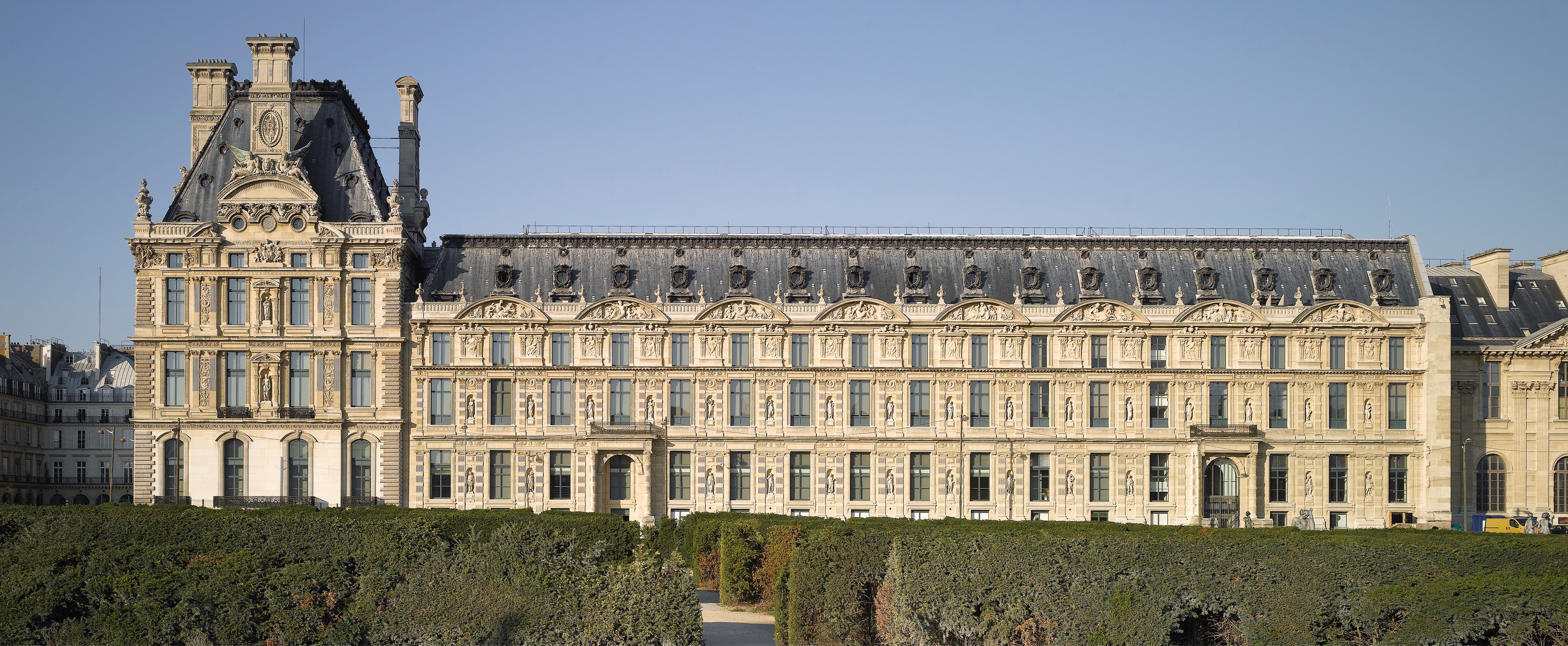
Website lead visual: documented exterior context of the Musée des Arts Décoratifs, Paris, photographed by Carrieta 88, CC BY-SA 4.0. It does not depict Look: 40 Years of Fashion at the Museum or any object in that exhibition. The compatible original is held at https://artdegree.co/manus-storage/mad-paris-exterior-2006-carrieta88-cc-by-sa-4_8293ea70.jpg.
Image context
The lead photograph is Musée des Arts Décoratifs, Paris context, not Look: 40 Years of Fashion at the Museum or exhibition documentation. It is an exterior photograph by Carrieta 88, licensed CC BY-SA 4.0.