Deck: Lagos Fashion Week’s Green Access 2026 names a route from material and technique to production, critique and return. The relevant question is not whether craft looks contemporary. It is whether the work leaves a trace.
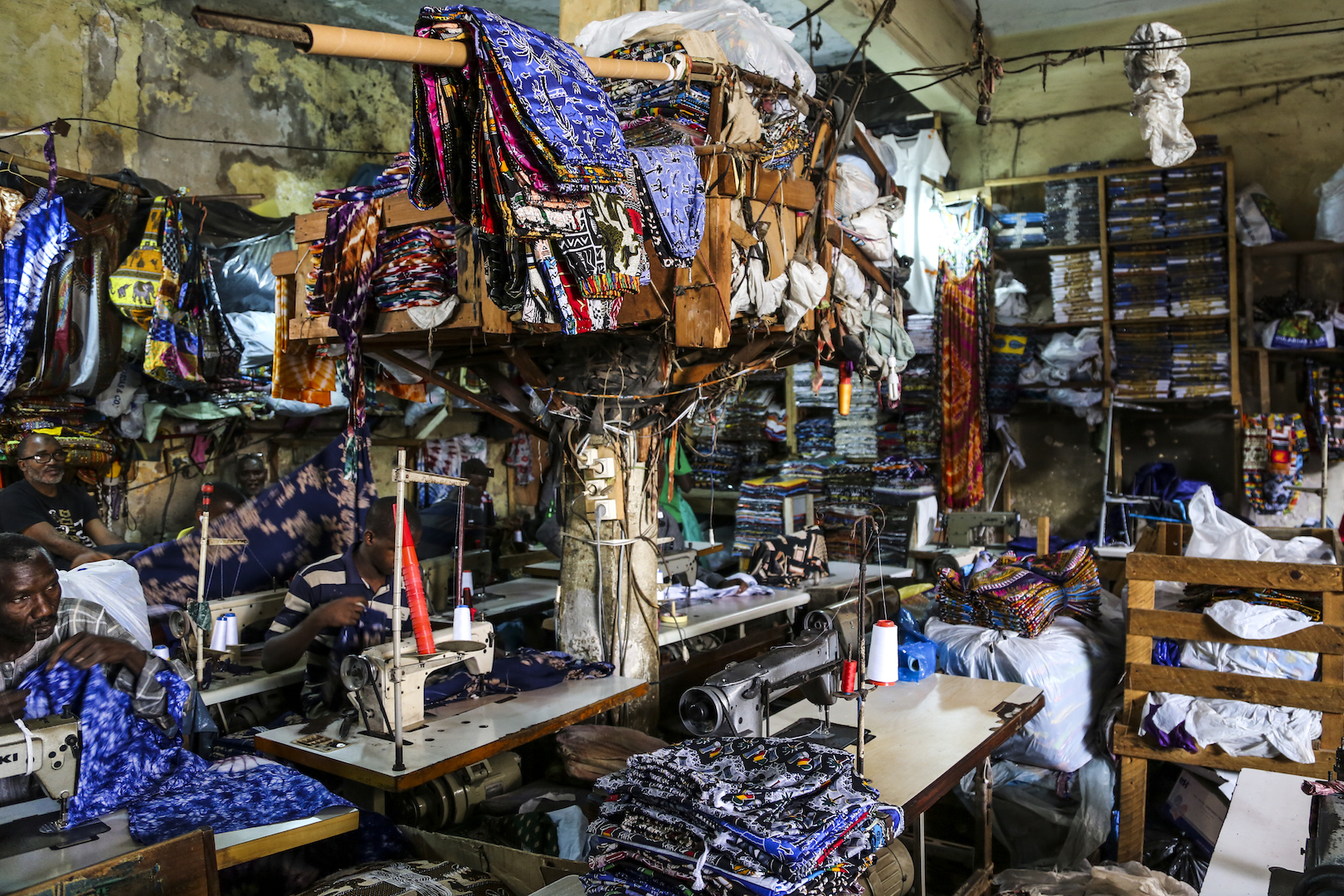
Fashion is very good at making craft visible just long enough to make it desirable. A surface travels: an embroidery, a dye, a weave, a hand-finished edge. The photograph supplies the mood—local, tactile, slow, precious—and the rest of the work can disappear behind it.
That is why Lagos Fashion Week’s Green Access 2026 is worth reading as a proposal for infrastructure rather than a sustainability vignette. Its title is CRAFTED IN PRACTICE: Reimagining Craft for a Circular Future. The stated ambition is not simply to preserve craft as tradition. It is to treat indigenous techniques, locally sourced materials and collaborative making as working resources for circular design, responsible production and commercial growth.
The distinction is small in language and large in consequence. A motif can be lifted from a practice without carrying its material history, its skilled labour, its production conditions or its future. A method has to be followed. It has sequence, people, constraints and evidence.
Green Access is a useful case because its official page names that sequence. The programme is described as a hybrid of virtual learning and hands-on work: material exploration, research and storytelling, circular-design masterclasses, prototype reviews, visits to artisan communities, manufacturer and production tours, craft and production workshops, business-development clinics, peer critique and brand communications. The four stated areas are material innovation through craft; heritage techniques reimagined; circular and responsible production; and community collaboration.
These are not results. The accessible page does not yet confirm a 2026 programme date, venue, selected cohort, public ticketing route, final presentation or measurable outcome. That boundary matters. A cultural magazine should not turn an accelerator’s intention into a completed success story simply because the intention is attractive.
But the proposal gives us better language for looking. Call it the Practice Trace.
Start with Material. What is actually named: deadstock, reclaimed textiles, indigenous fibres, locally sourced natural material—or only a general atmosphere of craft? Material is where a claim meets a supply path. It is not enough to call a collection responsible because it looks handmade.
Then Method. Is a technique being treated as a fixed visual signature, or as a process that can be tested, revised and carried into new work? Green Access names weaving, embroidery, dyeing, beadwork, leatherwork, knitting, quilting and hand-finishing among the practices participants are encouraged to reimagine. The programme’s own language makes the difference clear: the point is not tradition alone, but a live vocabulary for design.
Then Relationship. Who is described as part of the work? The page names artisan communities, craftspeople, manufacturers, textile producers and local makers. It does not tell us the terms of any future collaboration, the distribution of value or the particular relationships a selected designer will build. The trace therefore asks a precise question rather than supplying a flattering answer: who is named, and what remains to be documented?
Finally, Return. What will remain after the image? A prototype review, a production detail, a public account of a material, a collection that can be revisited, a repair route, a commercial continuation? Green Access says its stated sequence culminates in a final Lagos Fashion Week presentation that includes the research, materials and craftsmanship behind a collection. The reader should welcome that promised return while keeping the distinction between a programme plan and proof that it happened.
Lagos Fashion Week’s separate 2026 designer application makes the same argument from another direction. It asks for more than a lookbook. Applicants are asked for production and manufacturing information, wholesale or retail experience where applicable, and an overview of responsible circular practices. The selection language values creative excellence and craftsmanship, but also commercial potential, innovation, responsibility and collaboration. This does not settle whether any individual brand meets those terms. It does show an institution trying to make the route from creative work to lasting practice legible.
This is where the current global fashion calendar becomes more interesting without becoming a race between cities. Paris Fashion Week’s official schedule makes distribution visible: invitation-only physical shows, digital versions, livestreams and later films. Lagos Fashion Week’s Green Access page makes a different layer visible: a proposed chain of material, technique, production, critique and market readiness. One vocabulary tells a reader how fashion is encountered. The other asks what must happen before and after the encounter can be sustained. Neither is a universal model. Together they make the image less self-sufficient.
Craft does not need to be rescued from the present by being made more picturesque. It needs to be read as knowledge with material stakes. The Practice Trace is a modest discipline for doing that: Material. Method. Relationship. Return. If the trace cannot be followed yet, say so. If it can, the work becomes more than a motif. It becomes a reference that can be returned to.
Official sources: Lagos Fashion Week — Green Access 2026 · Lagos Fashion Week — 2026 designer application · FHCM — Paris Fashion Week Final Calendar.
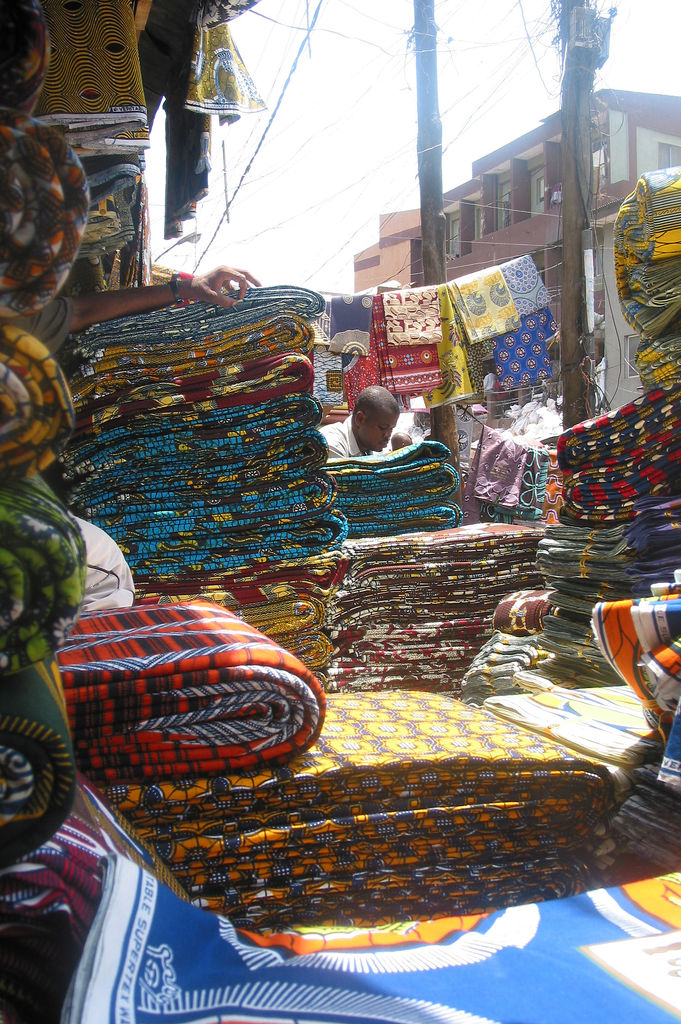
Website lead visual: documented Lagos cloth-market context, by Zouzou Wizman, CC BY 2.0. It does not depict Green Access 2026, Lagos Fashion Week, a participating designer or a programme activity. The compatible original is held at https://artdegree.co/manus-storage/lagos-cloth-market-2005-zouzou-wizman-cc-by-2_a1247b2b.jpg.
Image context
The lead photograph is Lagos cloth-market context, not Green Access 2026, Lagos Fashion Week, a participating designer or a programme activity. It is 2005 cloth market, Lagos, Nigeria by Zouzou Wizman, licensed CC BY 2.0.