Design weeks operate on a different frequency than art fairs. Where art fairs demand restraint and coded luxury, design weeks celebrate expression and local identity. The dress codes shift with geography—Milan's polished minimalism, Paris's intellectual ease, London's experimental edge. Understanding these distinctions isn't just cultural literacy; it's professional fluency.

Milan: The Cult of Bella Figura
Milan Design Week—centered around the Salone del Mobile furniture fair—is where Italian craftsmanship meets contemporary innovation. The city's dress code reflects this duality: impeccably tailored but never stuffy, luxurious but lived-in. The concept of bella figura (making a good impression) governs everything from gallery openings to showroom visits.
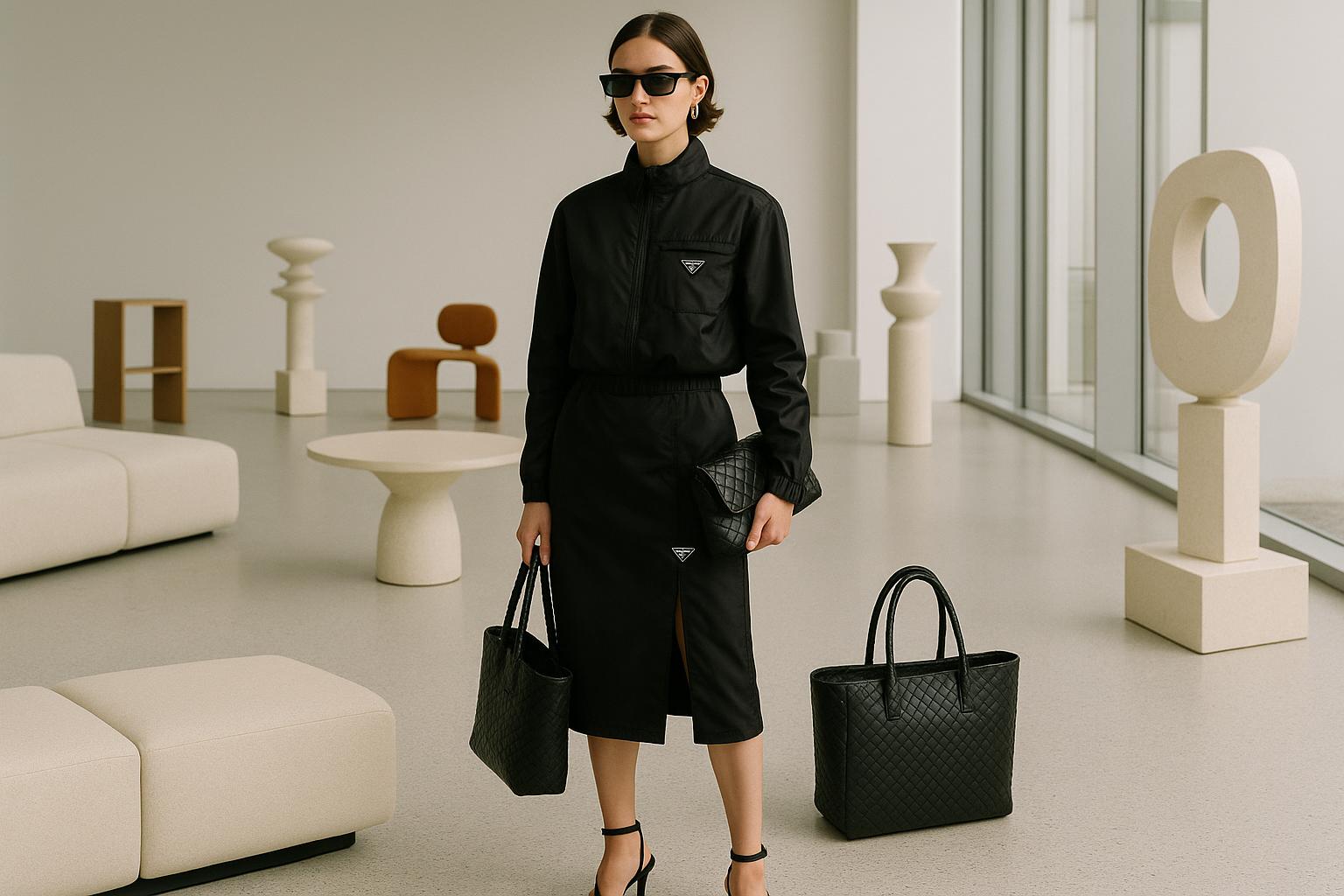
Prada and Marni dominate the Milan Design Week aesthetic. Miuccia Prada's intellectual approach to fashion—where ugly becomes beautiful through context and craft—resonates with designers who value conceptual rigor. Her nylon bags, once dismissed as anti-fashion, are now design icons. Marni, under Francesco Risso, offers similar cerebral playfulness: oversized proportions, unexpected color combinations, artisanal details that reward close inspection.

Bottega Veneta's intrecciato leather weave has become shorthand for quiet Italian luxury. Matthieu Blazy's tenure has emphasized craft over logos—the opposite of fashion's usual trajectory. His slouchy leather bags, butter-soft jackets, and architectural knitwear appeal to design professionals who appreciate material innovation.
Footwear matters in Milan. The city's cobblestone streets and endless walking demand both style and substance. Common Projects' minimalist sneakers—designed in New York, made in Italy—have become the unofficial shoe of design week. Their clean lines and quality construction embody the design principle of "less but better."

Paris: Intellectual Ease
Paris Design Week, coinciding with Maison&Objet and Paris Design Week proper, attracts a more cerebral crowd. The French capital's design community favors understated elegance over obvious luxury—think worn-in Levi's with a perfectly cut blazer, vintage Hermès scarves as accents, not statements.
A.P.C. (Atelier de Production et de Création) epitomizes Parisian design week style. Jean Touitou's brand has spent three decades perfecting the art of the well-made basic: raw denim that ages beautifully, oxford shirts with perfect proportions, wool overcoats that last decades. It's anti-fashion fashion, designed for people who claim not to care about clothes but somehow always look impeccable.
Jacquemus brings Provençal ease to Parisian sophistication. Simon Porte Jacquemus's designs—oversized straw hats, asymmetric dresses, sculptural bags—inject playfulness into French minimalism. His shows, often staged in lavender fields or on salt flats, reflect design's increasing interest in experience over object.
Isabel Marant's relaxed bohemian aesthetic—embroidered blouses, slouchy boots, effortless separates—appeals to design professionals who value comfort without sacrificing style. Her pieces look equally at home at a gallery opening in the Marais or a design studio visit in the 11th arrondissement.
London: Experimental Edge
London Design Festival embraces eclecticism. The city's design week dress code is the most permissive of the three capitals—anything goes as long as it's intentional. British designers have always excelled at subverting tradition, and their personal style reflects this irreverence.
JW Anderson leads London's conceptual fashion movement. Jonathan Anderson's designs—whether under his own label or at Loewe—blur boundaries between art, craft, and fashion. His oversized silhouettes, unexpected fabric combinations, and collaborations with artists appeal to designers who see clothing as cultural commentary.
Wales Bonner brings Afro-Atlantic aesthetics to British tailoring. Grace Wales Bonner's meticulously researched collections—drawing on Caribbean culture, Black British identity, and European craft traditions—resonate with design professionals interested in cultural hybridity and historical depth.
Martine Rose's deconstructed sportswear has cult status among London's design crowd. Her oversized football jerseys, reconstructed workwear, and collaborations with Nike reflect British subcultural traditions—mod, punk, rave—reinterpreted for contemporary contexts.
The Cross-Cultural Constants
Despite geographic differences, certain brands transcend local codes. The Row's minimalist tailoring works equally well in all three cities. Lemaire's architectural silhouettes appeal to design professionals who value form and function. Acne Studios' Scandinavian minimalism—neither too formal nor too casual—adapts to any design week context.
Vintage shopping is universal currency. A 1990s Helmut Lang blazer, a vintage Issey Miyake pleated piece, or archival Comme des Garçons signals cultural knowledge and sustainability consciousness. Design professionals appreciate fashion history the way they appreciate design history—as context for contemporary practice.
The Practical Considerations
Design weeks involve extensive walking, multiple venue changes, and unpredictable weather. Successful design week dressing balances aesthetic ambition with practical necessity. Layering is essential—a well-cut coat over a simple turtleneck allows for temperature regulation without sacrificing style.
Bags matter. Design professionals carry laptops, notebooks, business cards, and often product samples. Tote bags from previous design events (Salone del Mobile, Maison&Objet) function as both practical carriers and social signals. They indicate insider status—you've been before, you're part of the community.
Comfortable footwear is non-negotiable. Even the most stylish outfit fails if you're limping by day two. Brands like Camper, Veja, and Common Projects offer design-forward comfort. Avoid anything new or untested—design week is not the time to break in shoes.
The Brands That Work
Milan:
- Prada: Intellectual luxury, nylon bags, architectural silhouettes
- Marni: Playful proportions, unexpected colors, artisanal details
- Bottega Veneta: Craft-focused luxury, intrecciato leather, quiet sophistication
- Common Projects: Minimalist sneakers, Italian craftsmanship
Paris:
- A.P.C.: Perfectly proportioned basics, raw denim, timeless design
- Jacquemus: Provençal ease, sculptural bags, playful minimalism
- Isabel Marant: Relaxed bohemian, effortless separates, Parisian cool
- Lemaire: Architectural silhouettes, functional elegance
London:
- JW Anderson: Conceptual fashion, art collaborations, boundary-pushing design
- Wales Bonner: Afro-Atlantic aesthetics, cultural research, impeccable tailoring
- Martine Rose: Deconstructed sportswear, subcultural references, oversized silhouettes
- Loewe: Craft-focused luxury, leather goods, Jonathan Anderson's vision
Universal:
- The Row: Minimalist tailoring, exceptional fabrics, quiet luxury
- Acne Studios: Scandinavian minimalism, versatile basics, contemporary cuts
- Vintage Helmut Lang, Issey Miyake, Comme des Garçons: Fashion history, sustainability
The Unwritten Rules
Don't overdress. Design weeks reward thoughtful restraint over obvious luxury. A well-cut coat and quality basics outperform logo-heavy designer pieces. The goal is to look like you understand design principles—proportion, material, craft—not like you're trying to impress.
Context matters. A gallery opening in Milan's Brera district demands more polish than a warehouse installation in London's East End. Read the room, adjust accordingly. Design professionals appreciate adaptability.
Authenticity trumps trends. Wearing something because it reflects your taste is always better than wearing something because it's currently fashionable. Design weeks attract people who make things—they can spot inauthenticity immediately.
The Takeaway
Design week dressing is about understanding local codes while maintaining personal identity. Milan rewards polished minimalism, Paris values intellectual ease, London embraces experimental edge. But the underlying principle remains constant: dress with intention, prioritize quality over quantity, and let your clothing reflect your understanding of design principles.
The best-dressed design week attendees aren't following trends—they're demonstrating fluency in the language of design. Their clothing choices reflect the same principles they apply to their work: form follows function, less is more, and craft matters. That's not fashion advice. That's design thinking applied to personal style.