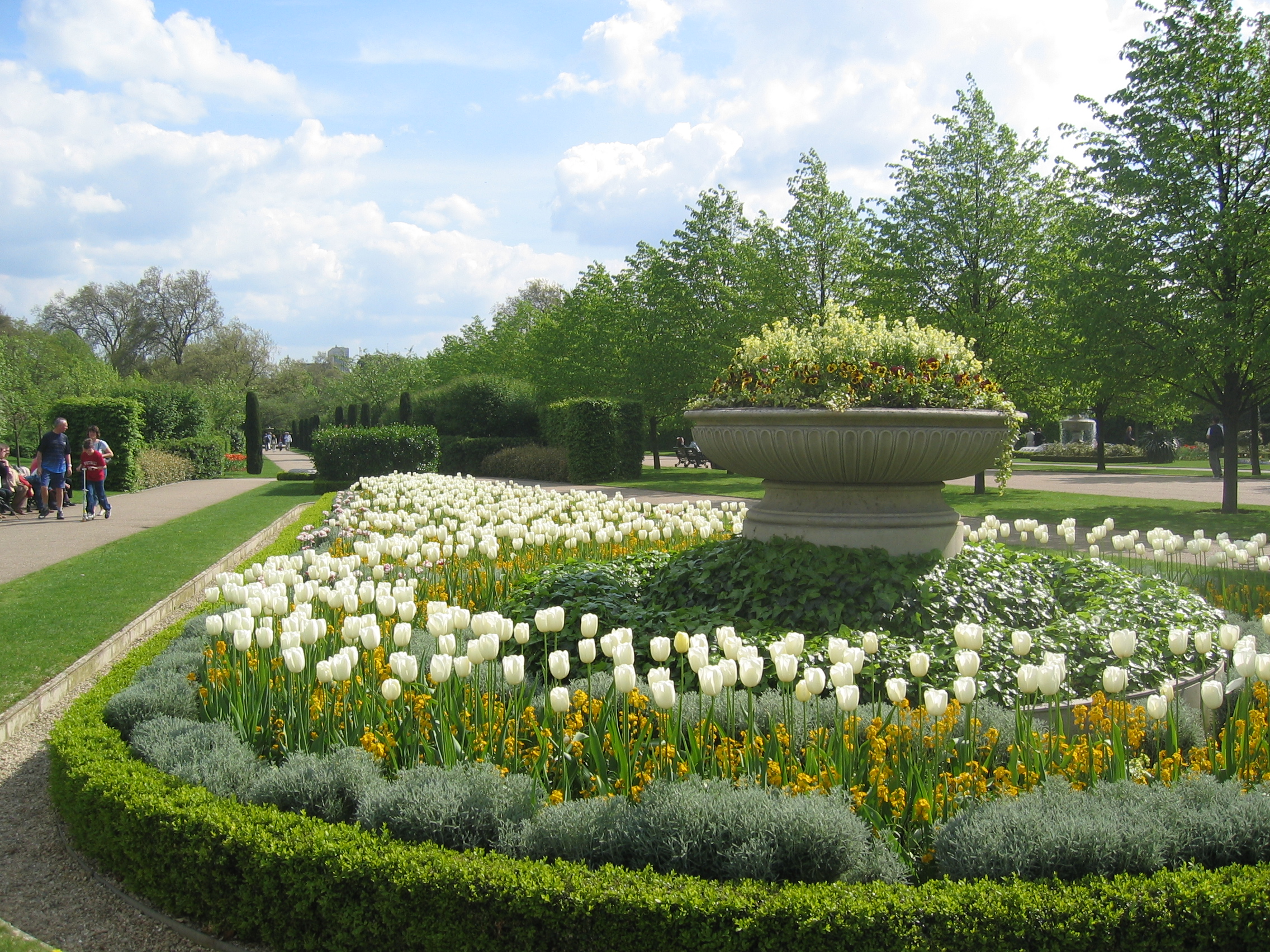
Image context: Regent’s Park garden view by Umezo KAMATA (CC BY-SA 3.0), via Wikimedia Commons. It does not depict Frieze Sculpture 2026 or a programme artist.
A park is not the public. It is the place where a public can begin.
Frieze Sculpture’s 2026 edition sits in the English Gardens of The Regent’s Park from 16 September to 1 November. Frieze calls it a free public outdoor exhibition; the Royal Parks calls it a free display of major outdoor artworks. Those are meaningful conditions. They create a first encounter without a fair ticket or a white-cube threshold. But the real interest begins after that first encounter: what does a work need in order to become part of the life of a city, rather than simply appear within it? 1 2
Frieze Sculpture already has more of that answer than a park installation can suggest at first glance. The 2026 programme names free curator-led tours, a Night Walk, a British Sign Language tour and a Bloomberg Connects audio guide narrated by curator Fatoş Üstek. It also makes one production chain visible: the Mtec Bursary enabled Dom Art Gallery and Elena Nemkova to realise Agony in the Garden, with technical and logistical support for installation. The work is not public merely because a passer-by can see it. Its public life is made through artists, curators, galleries, bursary, fabrication, route and interpretation. 1
That is not an indictment of the fair ecology around the park. It is its opportunity. A public encounter becomes more convincing when the structures that made it possible are named, rather than hidden behind the ease of a walk in the gardens.
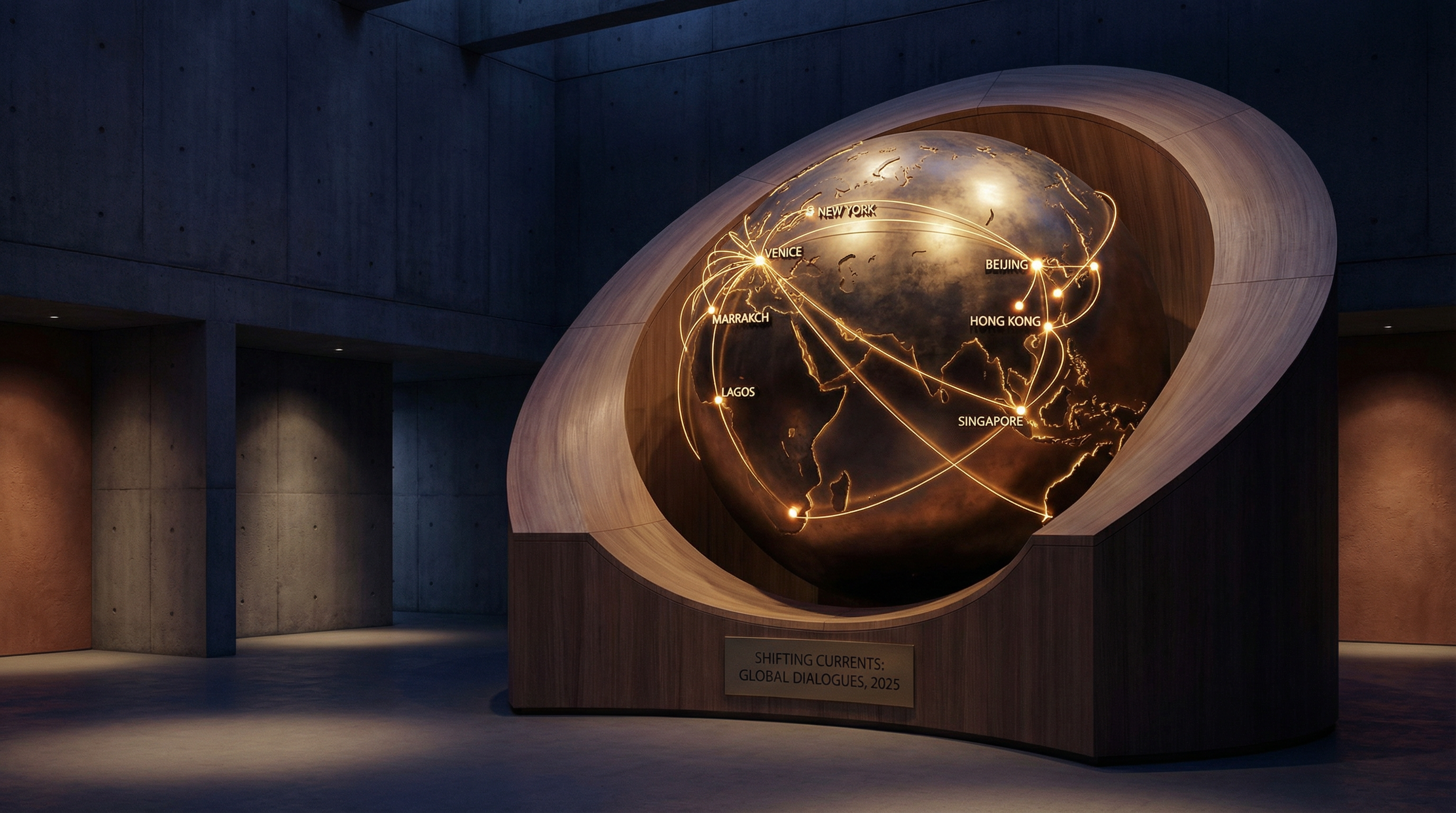
The question has larger precedents. Venice is perhaps the clearest example of a city becoming the atmosphere of an art event. In 2026, the Biennale extends across the Giardini, Arsenale and 46 city-centre locations, while Collateral Events spread further across Venice. The streets, water routes and small detours make cultural plurality feel physically distributed rather than concentrated in one building. Yet the Biennale is a useful comparison precisely because it refuses a lazy idea of publicness: Giardini and Arsenale have tickets, reservations, last-admission times and closure days. The city is the connective tissue; it is not an all-access pass. 3 4
Milton Keynes offers a different lesson. The city’s Council records more than 270 public artworks and a 50-year commissioning history, while the Parks Trust cares for more than 30 works across its parks. The important model is not a single monumental object. It is art woven into movement, landscape, seating, stations, parks and the routes people already use. A recent Yinka Ilori floor mural in Station Square directs pedestrians between the station and the city centre, while the Council provides a visually quiet alternative route for people who do not wish to encounter its intense pattern. This is public art as a real civic condition: not only visible, but designed with use, difference and care in mind. 5 6
The Fourth Plinth clarifies the question of voice. It brings contemporary art and debate to Trafalgar Square for free, but it does not pretend that a public vote is the same as an artistic decision. The Greater London Authority describes a process in which public consultation sits alongside an independent Commissioning Group of artists, journalists and curators; the Mayor approves the winning artist on that group’s recommendation. Its strength is procedural clarity. People have a route into the conversation, and the institution is explicit about who holds responsibility for the commission. 7
Frieze Sculpture is not yet a best-in-class civic-art system in the way Milton Keynes is a long-term municipal network or the Fourth Plinth is a publicly mandated city commission. Nor should it claim Venice’s city-wide scale. It is a seasonal, fair-linked platform with a distinct advantage: concentrated curatorial attention in a shared landscape. The ambition is not to borrow another programme’s authority. It is to build on Frieze Sculpture’s own strongest conditions.
That requires a second reader tool alongside the original Publicness Test. Call it the Civic Art Circuit.
Site asks whether a work meets a place already alive with ordinary uses: walking, meeting, play, weather, rest and indifference.
Terms asks for the actual threshold: free, booked, timed, guided, quiet, step-free or otherwise specified.
Voice asks who can respond and who decides. Public response matters, but so does named curatorial responsibility.
Route asks whether interpretation follows the ways people already move, rather than waiting for a specialist visitor.
Return asks what remains after de-installation: an audio guide, a map, an artist’s account, a record of the commission, a local partnership or a reason to come back.
The Circuit shifts the question from “Who is this for?” to a more useful one: What has been built so that different people can make something of it? It is not a scorecard. It is a design brief.
For Frieze Sculpture, the next level would be practical rather than rhetorical. Each work could carry a concise public route card: where it is, what makes it possible, which access routes are available, what local history it meets and what survives afterwards. A local walking, school, parks or disability partner could shape one route that begins from ordinary use of the park rather than from the fair calendar. Audience responses could be invited in a form that informs the programme without disguising curatorial selection as a popularity contest. The archive could record not only images of works but the labour, conversations and care around them.
This is where contemporary art becomes civic discourse. It does not need to flatten an artwork into a lesson or market itself as an instrument of soft power. It needs to host exchange well. International artists, local routes, institutional partners and visitors meet under conditions that are visible enough to question and generous enough to use. That is a modest form of cultural diplomacy: not prestige projected outward, but a city making room for different kinds of attention and leaving a trace of what they made possible.
A park is where art can meet everyday life. The public is made when that meeting has a route, a voice and an afterlife.