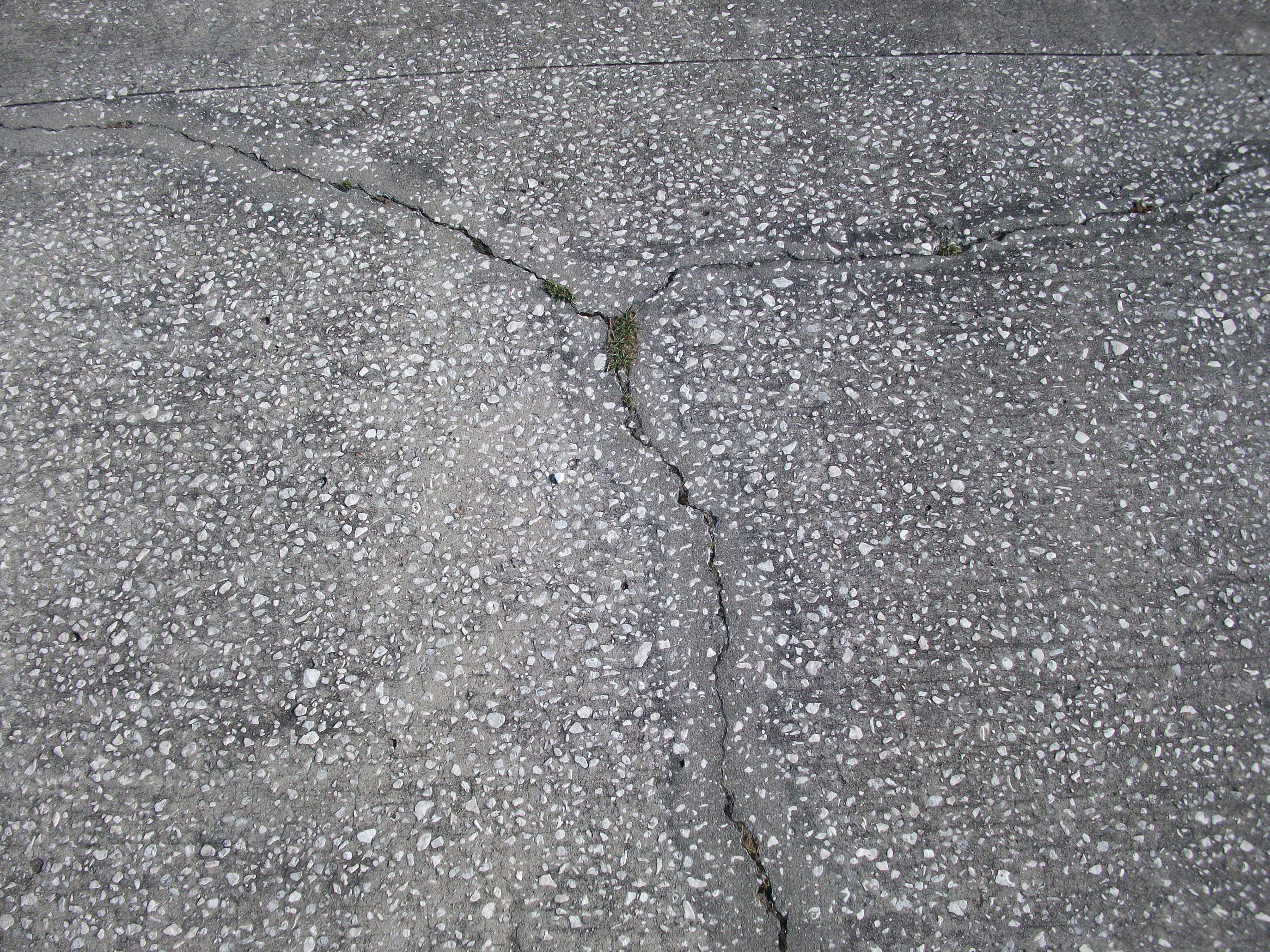
A crack is a small act of disclosure.
It tells you that a surface has met water, pressure, movement or time—and that a system now has to decide what it believes repair is for.
The modern fantasy is not that things last forever. It is that they should disappear cleanly when they fail: upgraded, replaced, re-coated, redeveloped. Repair interrupts that fantasy. It keeps failure visible. It keeps the future attached to the thing that already exists.
That is why a laboratory experiment in bacterial self-healing concrete matters beyond the concrete itself. Not because it offers the lazy promise of a building that magically mends, but because it poses a severe design question at a civic scale: what would it mean to expect a material to meet failure with care rather than concealment?
Repair is a right to an afterlife
The right-to-repair movement has made an apparently technical point feel cultural again. A thing is not fully ours if its parts, manuals, tools and repair pathways are withheld from us. The European Union’s Directive on repair of goods, adopted in 2024 and due to apply from 31 July 2026, is designed to make repair easier for defined consumer goods through repair obligations, access to information and parts, and an additional year of legal guarantee where repair is chosen. [1]
The directive does not apply to buildings or concrete. A wall is not a smartphone with a cracked screen. That distinction matters. Concrete is not ordinarily engineered for obsolescence; it fails through a slower, public chain of water, loading, chemistry, workmanship, climate and deferred maintenance. But the right-to-repair movement gives us a useful language for the built environment. It asks whether a system anticipates its own afterlife, or whether it makes replacement feel inevitable when care becomes difficult, hidden or unaffordable.
Repair is not nostalgia. It is a design decision about access.
Clothes and furniture already know the social problem
The most persuasive repair stories are often not technological. They are domestic, tactile and visible. A darn makes a garment’s history part of its surface. An upholsterer’s work insists that a chair is not exhausted when its covering goes slack. Neither gesture is only about saving material. Both refuse the idea that a thing loses social value the moment it shows use.
Research on clothing repair in the United Kingdom is useful precisely because it complicates the moral version of the story. People do not simply repair when they care about waste. Product design, affordability, time, skills, identity and emotional attachment all shape whether repair happens. In a representative study of 300 UK citizens, participants identified a lack of skills, poor product design and the cost of repair as barriers, while attachment to clothes and shifting social norms could enable repair. [2]
That finding belongs in architecture as much as fashion. We cannot lecture people into maintaining systems that were designed to be inaccessible. A repair culture needs competent hands, spare material, clear information, room in the budget and permission to leave evidence of care visible. It needs an object, a garment or a building to be worth the trouble of knowing again.
The building is the hard case
There is a risk in carrying the language of repair too quickly from a jacket to a city. Buildings are collective. Their failures can be structural, expensive and dangerous. A garment can be altered for one body; a bridge, hospital, flood defence or apartment block has to answer to many bodies at once.
But the scale does not make repair less cultural. It makes its politics more obvious. Maintenance determines whose homes stay dry, which public structures remain usable and where the cost of neglect is allowed to accumulate. The crack in a concrete surface is not merely a visual event. It can become a route for water and aggressive chemicals, accelerating corrosion around reinforcement and turning a small opening into a larger intervention. [3] [4]
Djenné offers a different, specific image of this relation between material and care. The Great Mosque of Djenné in Mali is built in earthen material and maintained through regular plastering campaigns. That practice is not a picturesque substitute for engineering: UNESCO’s account of the 2009 restoration describes both the value of traditional masons and the limits of annual plastering after extreme rain exposed structural weakness. [5] The lesson is not that every building should imitate Djenné. It is that maintenance can be central to a building’s cultural life, collective knowledge and survival—and that care must be specific to a material’s actual conditions.
What the bacteria can, and cannot, promise
This is the right scale at which to read bacterial self-healing concrete. In the 2025 Scientific Reports study that prompted this piece, researchers tested Bacillus subtilis in concrete specimens. They compared bacterial and non-bacterial mixes, looked at river sand and manufactured sand, induced cracks, and observed results under defined curing conditions. Their reported crack closure and mechanical findings belong to those specimens, mixes and conditions. The authors themselves identify field application, large-scale production and bacterial survival as future work. [3]
The mechanism is elegantly modest. Dormant bacterial spores and a nutrient source are introduced to the mix. When a crack allows water and oxygen in, the bacteria can activate and help precipitate calcium carbonate—a mineral deposit that may seal part of the pathway. The ambition is not to abolish maintenance. It is to slow the moment when a small failure becomes a route for further damage. [3] [6]
This is why the vocabulary matters. A visibly closed crack is not automatically proof of restored structural performance. A laboratory result is not a building standard. A review of self-healing concrete cautions that researchers use different testing methods, and that evaluating a healing system requires more than an image of a sealed fissure: durability, permeability and microstructural evidence are part of the question, while strength recovery may be limited. [4]
The experiment is not diminished by those limits. The limits are its seriousness. It shows a material being asked to anticipate a particular kind of care, under particular circumstances. That is a more demanding proposition than a miracle material, and a more useful one.
A right to care
Perhaps the deepest connection between repairable clothes, furniture, devices and buildings is not a technology. It is a refusal of the dead end. A system can make care possible, legible and dignified. Or it can turn each small failure into an argument for replacement.
Concrete cannot be folded, patched at the kitchen table or sent back to a manufacturer. It is the hard case: heavy, collective and embedded in public life. Precisely because of that, it forces repair culture to grow up. Longevity is not the absence of failure. It is the quality of the response—to a crack, to a leak, to a worn surface, to the people who know how to keep a thing in the world.
What can a crack teach a building? That duration has to be designed. That maintenance is not an embarrassing afterlife. And that the future of a material may depend less on pretending it will never fail than on deciding what happens when it does.
References
[1]: European Commission, “Directive on repair of goods”.
[6]: University of Bath, “Using bacteria to create spontaneous self-healing concrete”.