The season ends in public. The room fills one last time; the sound system holds; an international crowd gathers around a shared release. This is not a negligible thing. A closing party is a concentrated form of memory. It carries the accumulated work of artists, technicians, performers, hosts, drivers, cooks, cleaners, promoters and returning audiences who have made a season together.
But an ending also asks a less photogenic question: what remains available to the place after the temporary demand has gone?
Hï Ibiza records its 2026 closing party on 9 October. Its listing offers a precise commercial endpoint: one final night in Playa d’en Bossa. It does not, by itself, tell us what the season returns to the island. That is not a criticism of one venue. It is a question any festival, fair or cultural season should be able to meet.
Call it the Re-entry Ledger.
The first line is asset. What local thing must still be usable after an event ends?
On Ibiza, this cannot mean only the dancefloor. The island’s official calendar also records Xacota Pagesa at Pou de Forada, a seasonal gathering around a well or spring that marks the end of harvest work through food, wine, music and dance, while honouring water. It belongs to a different history and economy from a club closing. The two should not be folded into one picture of “authentic Ibiza”. Their proximity instead makes a useful distinction visible: one ending is a ticketed international event; the other is a living rural practice that carries a relationship to water, food and participation.
The practice is not an archival remnant. In April 2026, the municipality of Santa Eulària described its Fira Rural de Fruitera as a programme valuing rural Ibiza traditions, local produce and native breeds, with Ball Pagès, xacota pagesa, artisans and a public dance. The asset is not a costume. It is a community-held form of knowledge that needs people, places and time in which to remain active.
The second line is custodian. Who holds the asset when the production leaves?
A well dance can be held by a colla, a municipality, families and people who know the form. A protected seagrass meadow has another custodial structure. UNESCO identifies Posidonia oceanica as central to Ibiza’s mixed World Heritage property, where natural and archaeological systems are under pressure from tourism and development. The Balearic Government’s regulated-mooring rules provide a concrete response: in designated high-pressure coastal areas, boats use low-impact buoys and general anchoring on Posidonia is prohibited.
This is not romantic ecology. It is public infrastructure. A place remains legible only if the systems beneath its glamour are allowed to function.
The third line is return. What concrete resource has been added, rather than merely promised?
Here an external comparison is useful. The New Orleans Jazz & Heritage Foundation owns Jazz Fest and says that festival proceeds support year-round programmes for music and culture. Its Community Partnership Grants direct funds to artists, schools and arts organisations across Louisiana, with published awards and a community-facing purpose. Ibiza need not imitate New Orleans; their histories are distinct. But the mechanism is transferable. An international cultural season can move beyond sponsorship language when a transparent, locally governed fund gives public evidence of return.
The fourth line is re-entry date. When can a reader, resident or worker look again and see whether the place is more usable?
This is the line that turns a closing from an image into an obligation. A re-entry date might be a spring programme at a local school, a published set of cultural grants, a conservation-monitoring report, a restored access route or a public account of low-season employment. The exact form should be chosen by local custodians, not invented by a visiting audience or a marketing department.
None of this asks Ibiza to become joyless. Dance culture is real culture: a craft of timing, sound, bodies and collective trust. Its international reach can make an island a meeting point. The question is whether that meeting point is reciprocal.
A memorable season should give its host place more than a final image. It should leave a practice with room to continue, a protected asset with support, and a date on which its promise can be checked.
The last night matters. The first usable morning matters too.
Official sources: Hï Ibiza Closing Party 2026 · Ibiza Travel — Xacota Pagesa · Santa Eulària — Fira Rural 2026 · UNESCO — Ibiza, Biodiversity and Culture · New Orleans Jazz & Heritage Foundation grants.
Image context
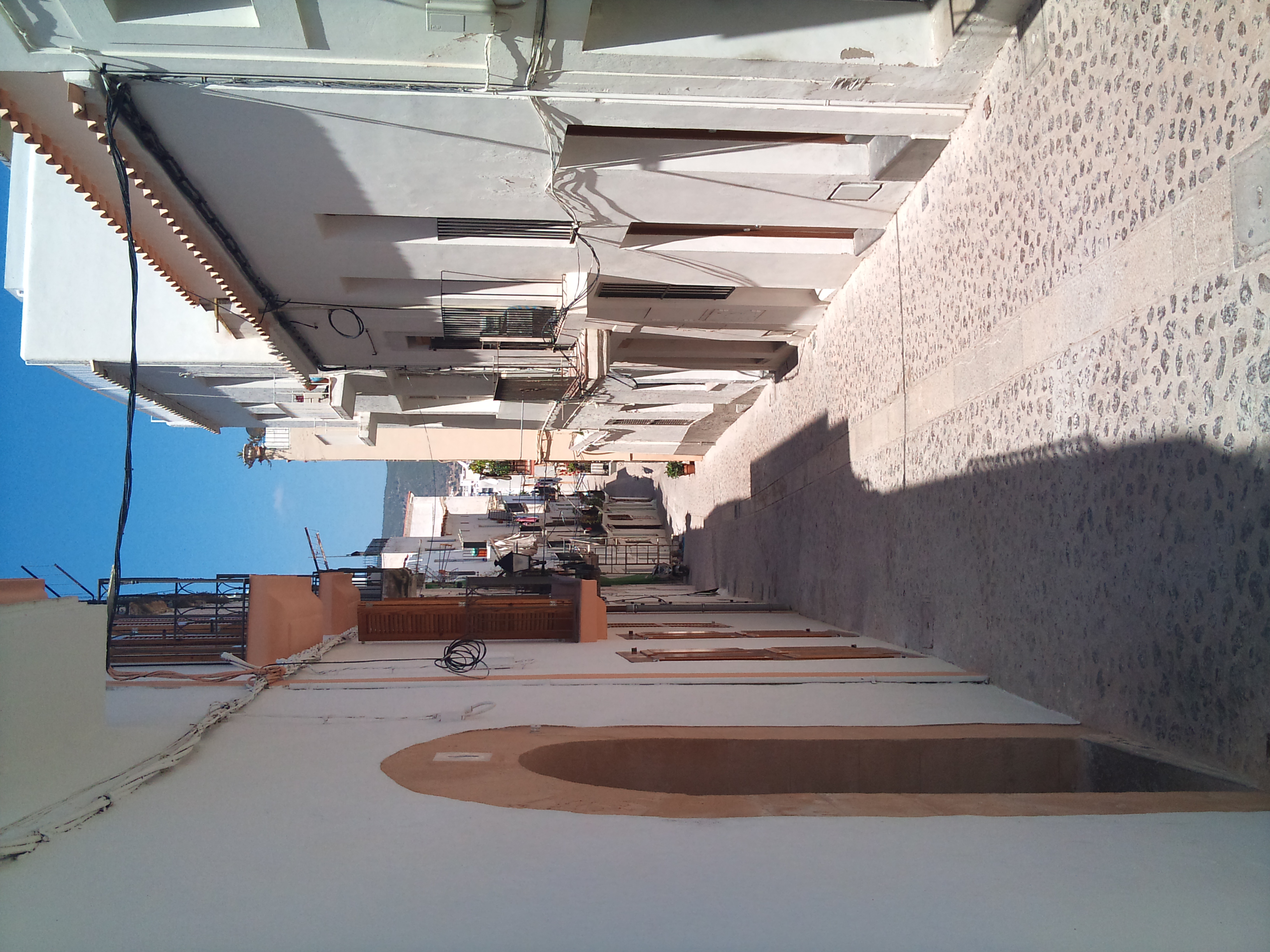
The lead photograph shows a street in Dalt Vila, Ibiza Town, in 2010. It is a document of public urban fabric, not Hï Ibiza, a 2026 closing party, Ball Pagès or a current programme. Photograph by Ivar Abrahamsen, CC BY-SA 2.0.