Deck: ART X Lagos offers a sharper way to assess an art fair: not only by the work assembled for a weekend, but by the learning, support and return it makes possible around that moment.
A fair is easy to photograph at its centre.
There are booths, opening-night clothes, works under light, the first rush of a room. The image can make the cultural moment appear self-contained: a gathering begins, a market opens, the crowd leaves.
But a fair is also made elsewhere.
In the workshop where someone learns how to shape a portfolio. At the small table where a collective names a problem in its working conditions. In a school where an ordinary object becomes a material for looking. In the grant that gives a photographer time to return to an archive already under construction.
These are not peripheral gestures. They are the conditions through which a public cultural event may become a longer cultural structure.
ART X Lagos returns on 5–8 November 2026. Its official About page presents the fair as a platform for contemporary culture from Africa and its diaspora, and names initiatives including the ART X Prize, The Development Forum, Art Across Borders, ART X Cinema, ART X Live!, ART X Talks and a Schools’ Programme. The detailed programme page is still labelled 2025, so it would be premature to turn last year’s formats into promises for November. What it does give us is a documented recent model for asking a useful question: what does a fair build when it is not asking us to look at the fair itself?
The 2025 Development Forum offers one answer. Its “For Us, By Us” session is described by ART X Lagos as a roundtable that broke with talk-heavy convention. Rather than using a panel to explain an ecosystem to emerging creatives, it placed participants at small tables to identify challenges and co-create practical responses. Its companion “Practical Pathways” workshop addressed the ordinary but consequential tools of a practice: portfolio development, applications, funding opportunities and international visibility.
The point is not to mistake a workshop for structural transformation. A two-hour session does not dissolve the unequal conditions of an art world. Yet it makes a particular kind of support visible. Knowledge becomes less atmospheric when it has a format, a facilitator, an application route and a question that a participant can take away.
The Schools’ Programme makes a different route visible. ART X Lagos’s 2025 page proposes work with five schools, an inter-school competition, the exhibition of three selected students’ work in the fair’s Kids’ Corner and visits by hundreds of students. It grounds its curriculum in the methodologies of J. D. ’Okhai Ojeikere and Bruce Onobrakpeya, asking young people to use everyday materials and to regard their environment with an archivist’s eye.
Here again, accuracy matters. The published page describes a programme model; it does not authorise us to assume all outcomes, or to make a generic claim that art is automatically accessible because a school has been invited. The useful fact is more precise: the fair has described a chain between an artist’s method, a workshop, a selection moment, exhibition and a visit to the wider fair.
That chain is worth reading because it refuses a familiar hierarchy. It does not make the exhibition the sole place where culture begins. Learning is not merely audience development. It is part of the work’s social infrastructure.
The ART X ICON Masterclass provides a third, more artist-specific case. ART X Lagos’s 2025 account connects ten emerging photographers with the legacy of J. D. ’Okhai Ojeikere through teaching led by his son, Amaize Ojeikere. Three photographers received recognition and grant support.
The reported continuities are distinct. Taslimah Woli is described as extending an archive of how people inhabit and interpret urban environments. Daniella Almona’s Faces of Dencity follows a women-led skate collective through portraits, film, archival prints and a future immersive exhibition. Amarachi Nnoli’s Archiving Igbo Joy proposes new portrait environments, family and community collaboration and on-the-spot prints that let participants take images home.
These are not interchangeable stories of “emerging talent”. They show different relationships between an institution’s support and an artist’s existing direction: an urban archive, a collective’s lived movement, an Igbo archive of joy. The fair’s role is not to invent the work. At its most credible, the documented support gives the work a little more time, resource, circulation or return.
ART X Lagos’s 2024 Access ART X Prize page puts a useful name to this longer horizon: an Alumni Impact Award, created to recognise sustained artistic growth after the first moment of selection. An institution should not be judged only by its ability to identify someone new. It should be read for the terms under which it remains in relation to a practice once the announcement has faded.
This suggests a small reader device: the Continuity Trace.
- Learn: where does a method or piece of knowledge become available?
- Enter: what allows a first route into the cultural space?
- Support: which specific resource follows?
- Return: what can continue after the public moment—an archive, a print, a later show, a community relation, a revised practice?
The Trace does not ask a fair to solve every cultural problem. Nor does it reduce culture to professional development. It simply relocates attention from the opening night to the structures that survive it.
That is why Lagos matters here not as a new market to be announced, but as a place where the terms of cultural continuity are being named: artist methods, school rooms, peer tables, photographic archives, grants and public encounters. The fair is one moment among them. The real question is what that moment helps to build.
Official sources: ART X Lagos — About and 2026 dates · The Development Forum · Schools’ Programme 2025 · ART X ICON Masterclass 2025 · Access ART X Prize 2024.
Image context
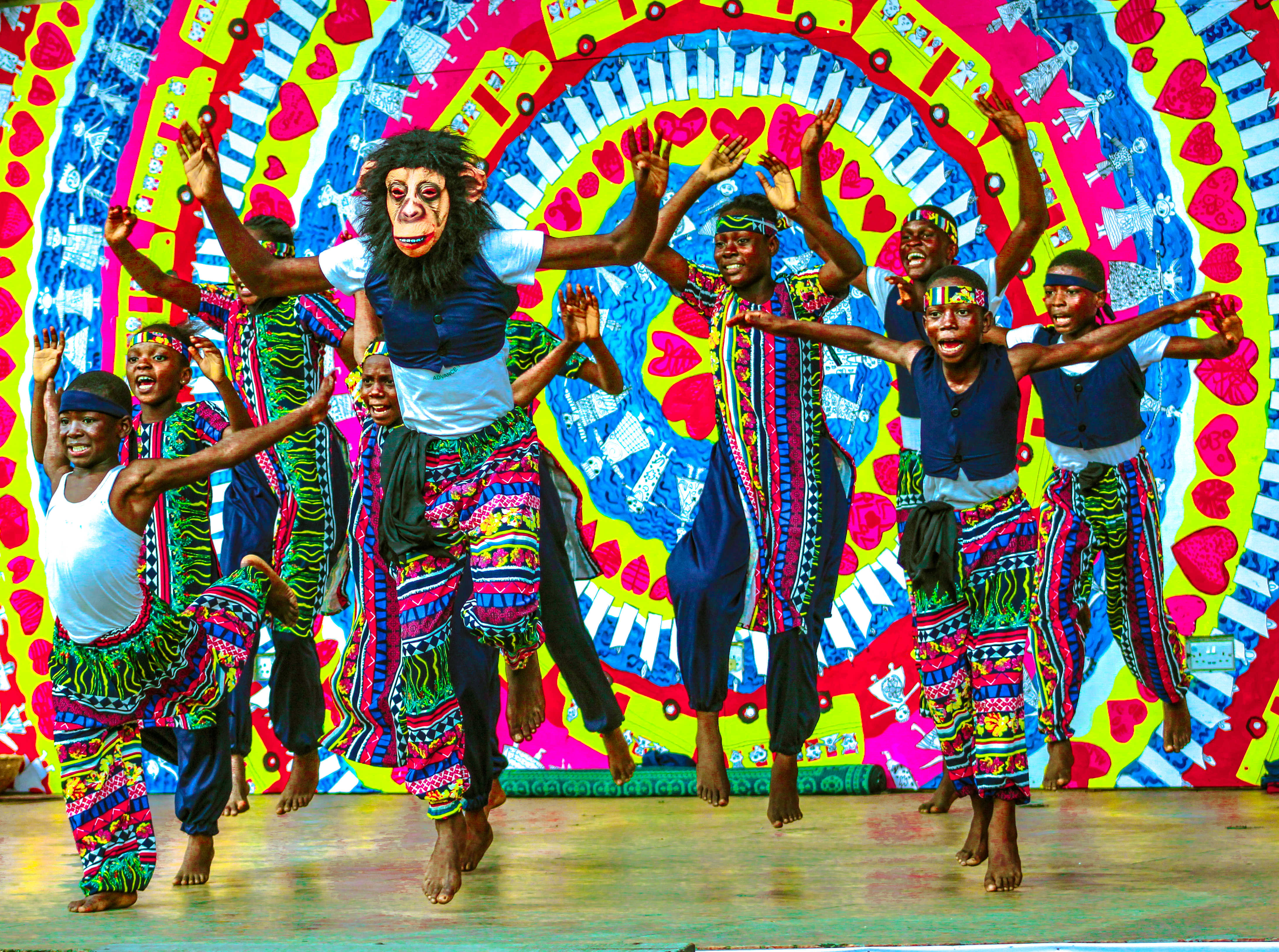
The lead photograph is a 2016 Freedom Park performance document in Lagos, not ART X Lagos, its Development Forum, Schools’ Programme or the 2026 edition. It was made by Agbaje Isabella and is released CC BY-SA 4.0.