Deck: Art Basel Paris will leave the Grand Palais for five days. The useful question is not whether the programme is in the city, but whether it changes who can enter, how they meet the work and what a site is allowed to mean.
A fair can spill into a city without becoming public.
It can place sculpture outside a hall, name a museum partner, commission a performance, activate a street and call the result an “open programme”. All of that may matter. None of it, by itself, tells us what has changed for a person arriving without an invitation, a collector’s pass or a working knowledge of the art world.
The difference is not philosophical. It is practical. Is there a ticket? A booking window? A limited capacity? A guided route? A host? Does the site alter the work, or merely lend it an attractive address? These are not administrative details around culture. They are part of the encounter.
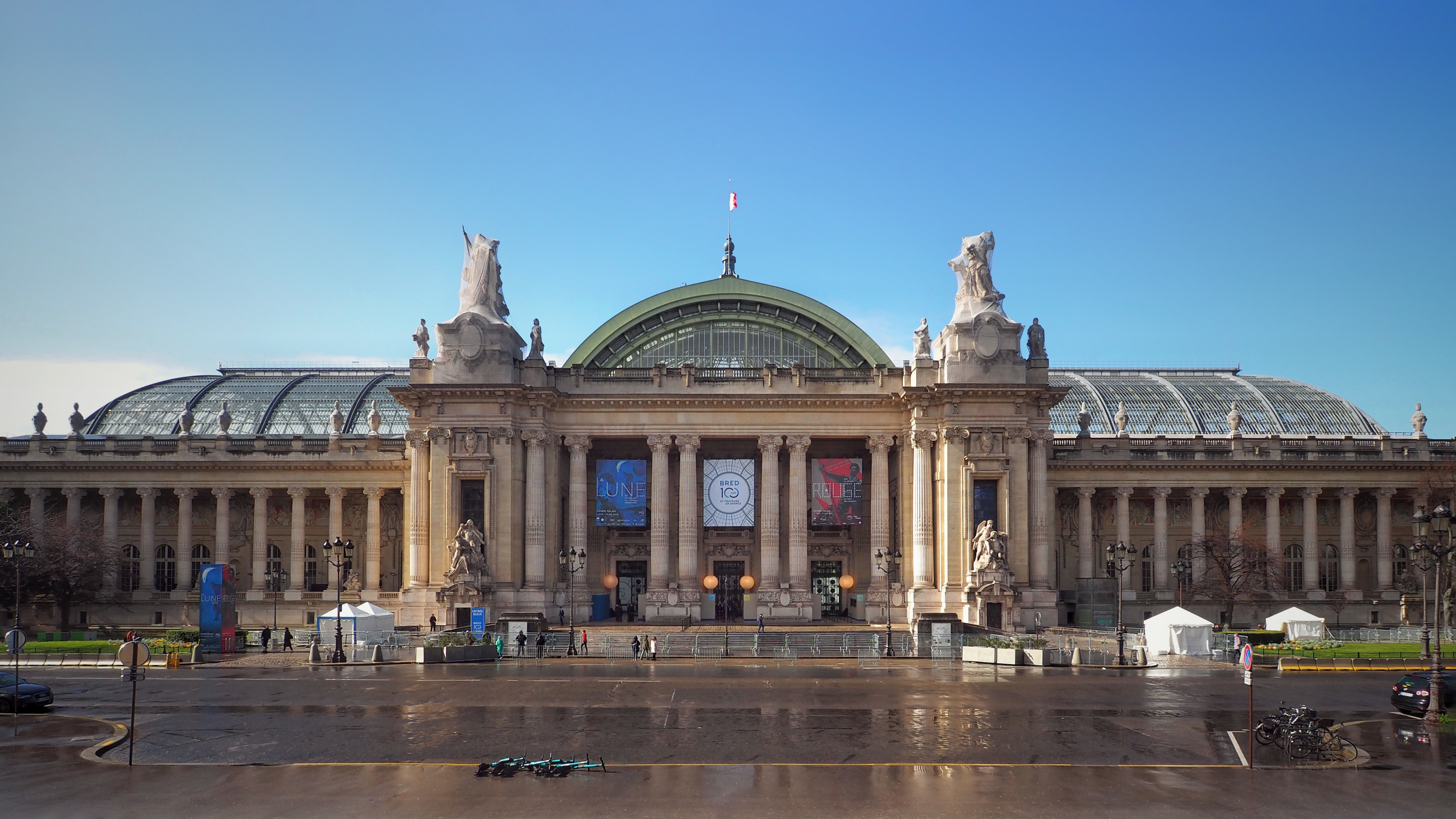
Art Basel Paris gives us a clean way to test the distinction. The fair returns to the Grand Palais from 23 to 25 October 2026. Its preview takes place on 21 and 22 October, by invitation only; its public days require a ticket or invitation. That is not a criticism. Fairs have terms, and those terms should be legible.
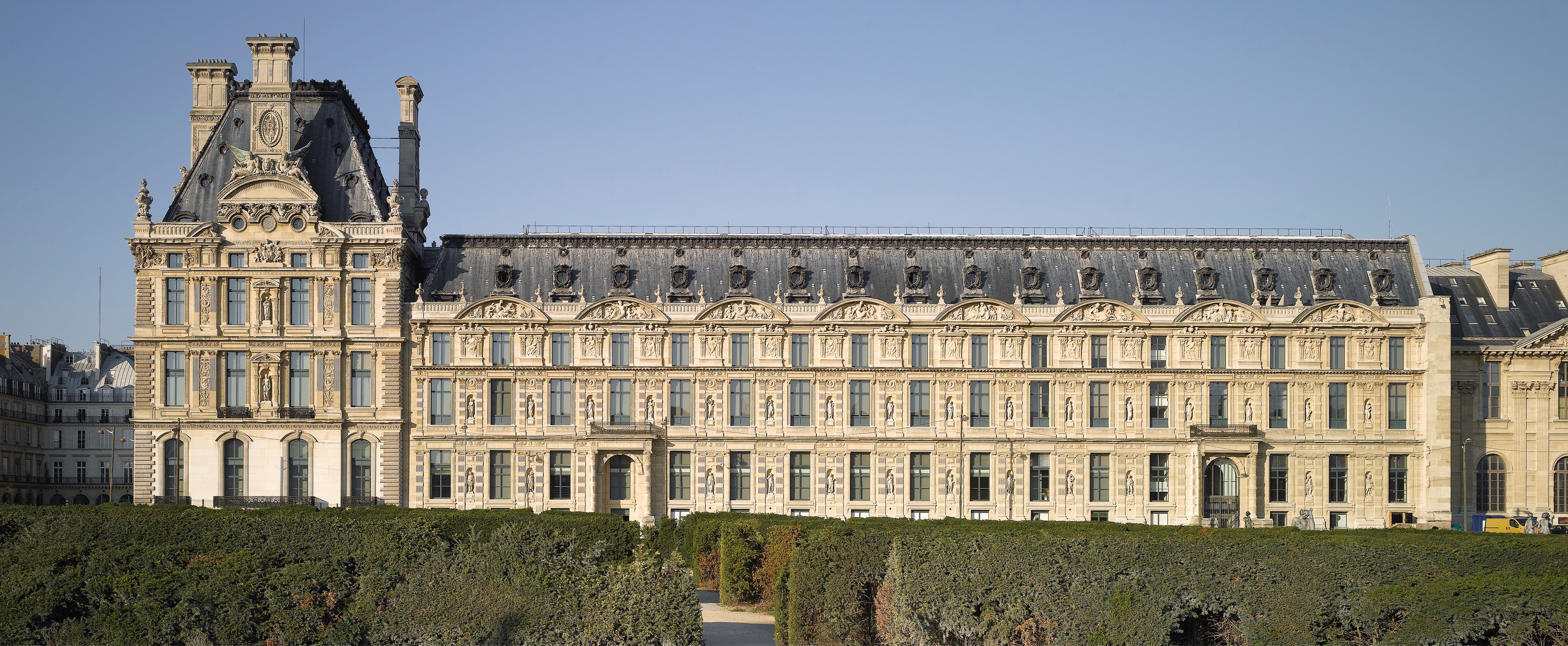
The more interesting material lies outside the hall. The 2026 Public Program moves through several Paris sites: Palais d’Iéna, the Chapelle des Petits-Augustins at Beaux-Arts de Paris, Petit Palais, Jardin de la Nouvelle-France, the Parvis des Droits-de-l’Homme and Avenue Winston-Churchill. The itinerary is not automatically a public good. But it creates occasions where the category of “fair visit” becomes less sufficient.
At the Chapelle des Petits-Augustins, Kutluğ Ataman’s Küba is open from 20 to 25 October, 10am to 7pm, with free access. The 2004 work places forty television screens among mismatched armchairs and salvaged furniture. Each carries the testimony of a resident of Küba, a former Istanbul settlement founded by people fleeing political persecution. The accounts of memory, fear, belief and aspiration do not resolve into a single authorised voice. They form a collective portrait shaped by migration, poverty, mutual protection and survival.
The access condition is only one part of what changes. Visitors do not move through a booth, a price list or a VIP queue. They move through overlapping testimony, in a chapel within an art school, with École du Louvre students on hand daily to provide information. The space asks for time and listening. It puts the viewer in a relation to a set of voices that is not reducible to acquisition or spectacle.
That is the first part of a useful reader’s device: Access. Can a person enter without the fair ticket? Here the answer is yes, with a stated date and daily hours. But access is not the same as absence of form. It has its own frame: a limited five-day run, a specific site and specified opening times. The honest description is not “open to everyone” in the abstract. It is free entry under named conditions.
At Petit Palais, Cosima von Bonin’s The Dollys & The Beaux offers a second case. The plush sculptures—leather octopi, mohair whales, velvet St Bernards and other creatures—occupy a historic sculpture gallery from 20 to 25 October. Entry is listed as free, with longer hours on Friday and Saturday and daily visitor information. Again, that is not just an amenity. It reshapes the pace of a fair week: a person can arrive in a civic museum rather than at the Grand Palais entrance, stand among the permanent collection and an exhibition installation, and encounter a work whose life includes fashion as well as art.
The commercial condition is visible here. The project was commissioned for Loewe’s Fall/Winter 2026 show and is presented by Petzel, Gaga and Neu. That does not disqualify the work from public encounter. It does mean that “free” is not a synonym for outside commerce. A serious public programme lets us see both sides: the public access and the institutional, gallery and brand structure that makes it possible.
The third part of the test is Site consequence. Does a location have interpretive weight, or is it simply an elegant background?
Alice Diop’s Geste de Consolation, at Palais d’Iéna from 21 to 25 October, asks this more directly. Diop’s first exhibition-making project moves through film, photography, sculpture, poetry, dance, music and performance. In Art Basel’s description, it centres acts of consolation conceived by Black women artists, gathering different disciplines, texts and performances into a four-part route. The guided tours require online registration, beginning 8 October. That condition should not be buried: registration affects who reaches the experience and how.
But the format also points to something larger than an off-site event. The project’s movement through connected spaces, and Diop’s use of montage as a curatorial method, makes the visitor’s route part of the work. A fair is no longer only an address. It becomes a question of what happens between addresses—between a ticketed market hall, an art-school chapel, a public museum gallery and a civic building.
This does not mean that a multi-site programme has solved publicness. It means that publicness has become testable.
Use the Civic Edge Test:
- ACCESS: Can I enter without buying the fair? Under what precise terms?
- ENCOUNTER: Am I asked to do something other than consume a display—listen, walk, linger, speak, learn, participate?
- SITE CONSEQUENCE: Would the work mean something materially different elsewhere, or is the place only scenery?
Three yeses create a civic edge. One or two may still make a worthwhile cultural moment, but the language should be more modest: outreach, activation, citywide visibility. Naming the difference is not cynicism. It protects the word “public” from becoming a flattering atmosphere.
The question also travels. ART X Lagos, whose next edition runs from 5 to 8 November, gives a different reference point. Its published account places the fair alongside ART X Live!, ART X Cinema, ART X Talks, a Schools’ Programme, The Development Forum and Resonance, a residency programme co-constructed with Cité internationale des arts and the Embassy of France in Nigeria / Institut Français du Nigeria. Resonance offers selected artists, designers and curators living in Nigeria a fully financed three-month residency in Paris, alongside mentoring, networking, studio space and a living allowance.
This is not a claim that Lagos and Paris use the same model, or that one fair can be ranked as more civic than another. The terms differ. The programmes differ. What ART X Lagos makes visible is another possibility: a fair can produce routes that continue after the event through education, conversation, mobility and professional support. Those routes should still be examined with their own questions of access and selection. Yet they stretch the time horizon of the fair beyond the four or five days in which a hall is open.
A fair becomes culturally consequential not when it claims the city as a backdrop, but when it gives the city a consequence in the work: a route that changes who can arrive, a structure for listening, a space whose history becomes part of the proposition, a form of support that does not end at the exit.
The task for the reader is simple. The next time a programme says “public”, do not ask only where it takes place. Ask what has actually changed.
Official sources: Art Basel Paris 2026 press dossier · Kutluğ Ataman, Küba · Cosima von Bonin, The Dollys & The Beaux · ART X Lagos · Resonance.
Website lead visual: documentary Grand Palais exterior, Paris, photographed by Ștefan Jurcă, CC BY 2.0. It is a 2019 city-context photograph and does not depict Art Basel Paris 2026, its artwork or programme. The precise source and adaptation record remain private.
Image context
The lead photograph is a 2019 Grand Palais, Paris context image, not Art Basel Paris 2026, its artworks or its Public Program. It was photographed by Ștefan Jurcă and is licensed CC BY 2.0.