In 1985, Issey Miyake declared: 'I try to make clothes the way Miles Davis plays music.'
Confident in the unity of a style, Miles Davis's music could radically change from album to album: Bitches Brew reimagines jazz with rock electricity; On the Corner jumps to funk and noise; Kind of Blue pays tribute to the modal structures of his early training.
An East St Louis kid, Miles Dewey Davis III grows up on bebop. In a high-school photograph, his hair is close-cropped and his tie precise. His jacket combines herringbone and a clean lapel, recalling the sharp dress of the Black bourgeoisie in which he was raised — his father was a dentist, his mother a music teacher. Between the Juilliard School and 52nd Street, Davis is a Harlem youth. He tries to be Charlie Parker, reads Nietzsche, meets Dizzy Gillespie. At the time, Davis wears suits — the mandatory bebop uniform of the serious musician who demands to be taken seriously. In Kind of Blue, 'Flamenco Sketches' closes the album by quoting the silence between notes.
In an early photograph with Charlie Parker and the 52nd Street regulars, Davis is still a Harlem prepster, almost a dandy: a lightly constructed suit, a wide-brimmed hat, a striped tie. Only the way he holds his trumpet — tilted down, almost contemptuous — suggests a darker sensibility.
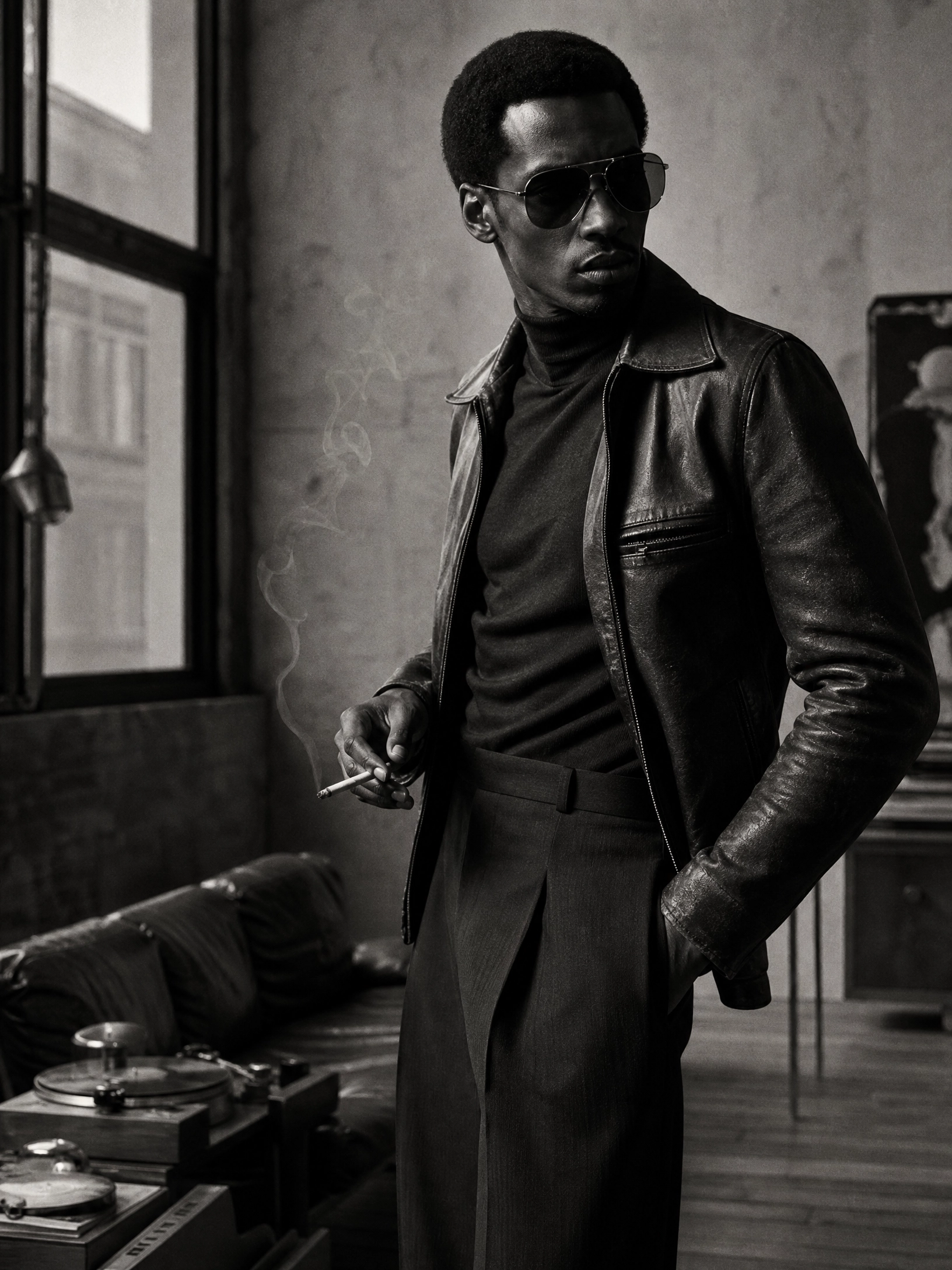
By 1969, a uniform has solidified. Turtlenecks under leather jackets (Italian, mostly; with a zip, always); tight trousers; platform boots. And aviators — always aviators. Intimidating and humorous, Davis's style matched his persona. Asked by a journalist why he had turned his back on the audience during performances, he replied: 'I don't turn my back on the audience. The audience turns its back on me when it talks.'
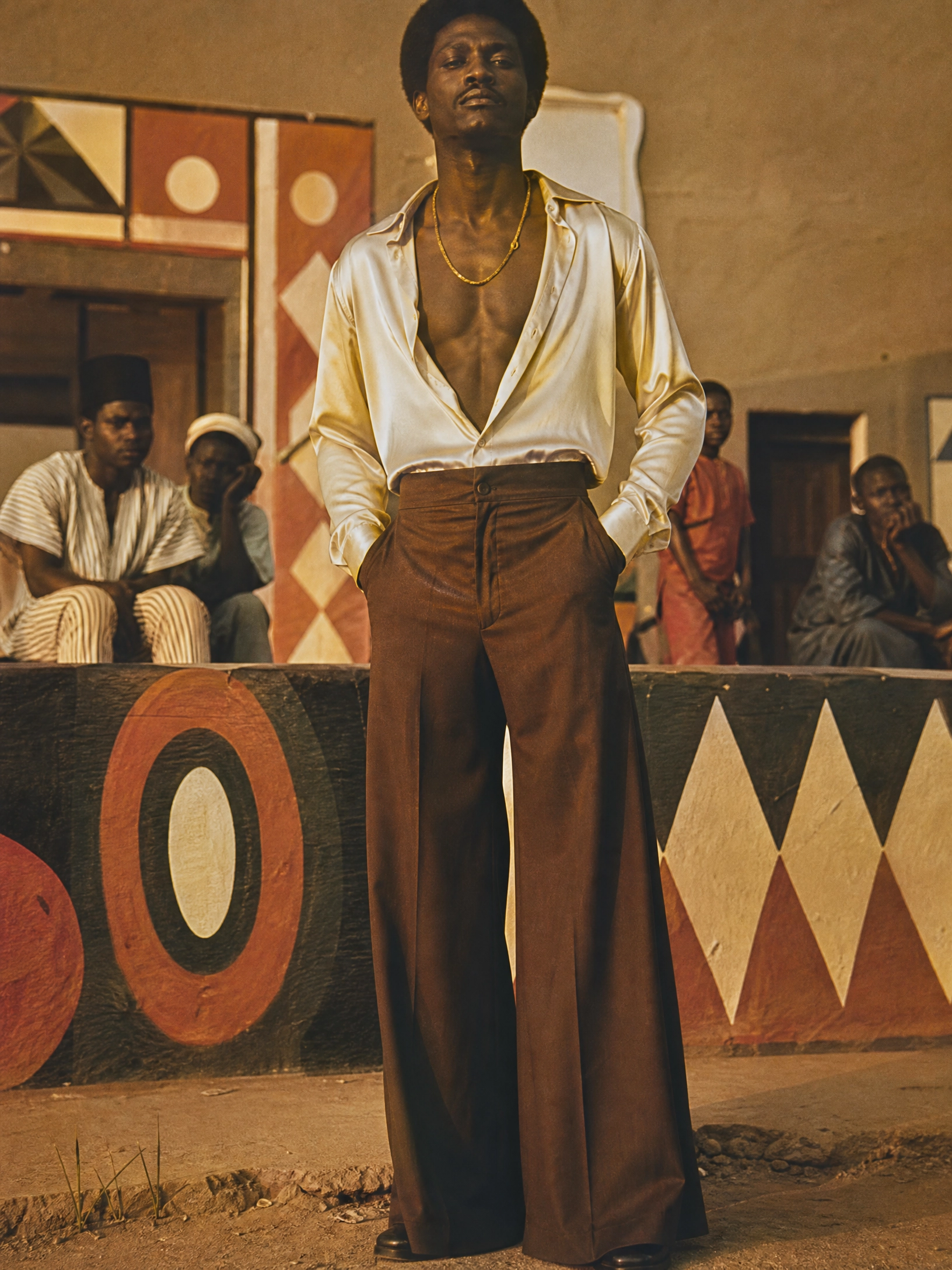
In the 1970s, as Davis's style grew more electric, the music grew more directly confrontational. The leather jackets were now wider, the colours more vivid — purple, orange, red — even welcoming a tracksuit jacket underneath, worn with the casual authority of a man who had nothing left to prove.
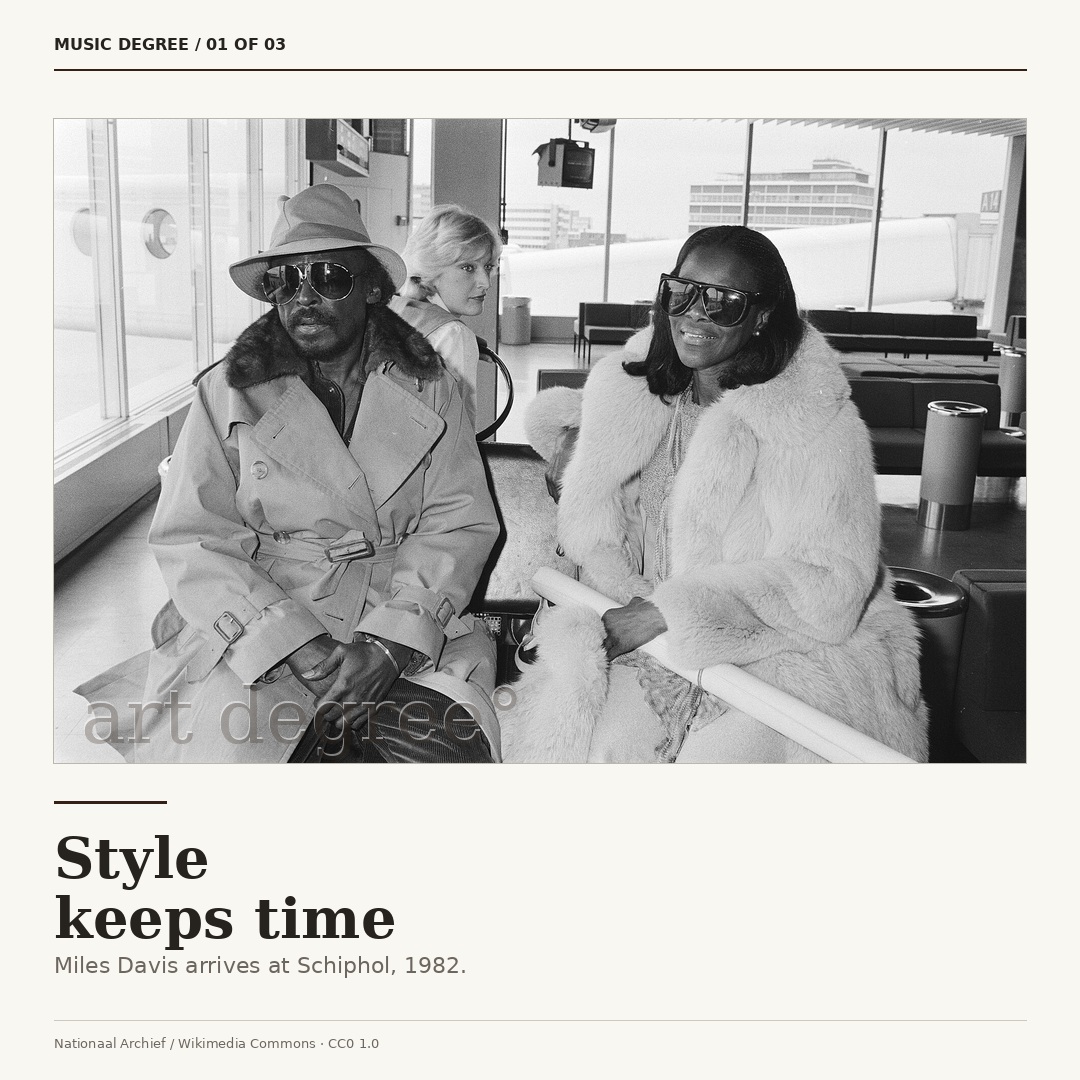
In later life, more urban choices held on to the pathbreaking ethos of his work: wire glasses, thick ribbed and zipped sweaters, a felt hat, puffer and jeans — but tailored, and bought from Issey Miyake. Less irascible, Davis maintained a certain defiance. His biographer Ian Carr tells the following story. A sales assistant at the Comme des Garçons store in New York, responding to Davis asking 'Why is this jacket so expensive?', replied: 'Perhaps because the person who made it is really good at what they do.' A long conversation ensued about construction and cut, and Davis wound up spending a considerable sum on clothes, including the jacket, and gifting the assistant the heavy leather one he had been wearing — a 1968 Italian motorcycle jacket, worth considerably more than anything in the shop.
'I'll tell you something about clothes,' Miles said, once, to no one in particular. 'You wear them. They don't wear you.'